Showing posts with label education. Show all posts

Making the Transition Back to In-class Learning


It is no secret how hard the last year or so has been. Teachers and students suffered and struggled. Everyone did their best in uncharted waters. The pandemic changed how we lived, taught, and learned. Now it is time to regain some sense of normalcy, which everyone is excited about. But how?

Researchers have figured out that holding students back a grade doesn’t solve any gaps in learning. Rather, it fosters apathy and boredom. Wrangling bored students to care about concepts they feel they have already learned is every teacher’s worst nightmare.

Assess Through Tasks


Use real world tasks to assess deep learning. For example, have them plan something that has a budget to see where they stand with basic math skills. You could have them work together in teams to see where their social skills need work. Reading parts in a play out loud is an easy way to see how their reading skills are progressing.


Refresh Before Test


Tests don’t always reflect what students know. They may have learned something, but need a refresher. Quickly go over what they should already know before testing them. Give them a chance to get in the swing of things before throwing a standardized test at them that may not reflect their actual knowledge.

Focus on Gains

Students may be behind in math and science this year. But what have they learned? Some students will be much better at time management and self-direction. Some learned better technology skills. When students had the ability to learn at their own pace, many were more self-motivated. The most beautiful gain? The majority of students said that they missed going to school. Socializing is such an important part of what is taught at school. Try to incorporate social aspects of learning to celebrate the fact that students are back together in the classroom.


Mind the Gaps


Try to identify the necessary prerequisite concepts that need to be taught before moving on. When there is disparity between levels, set up learning groups to reflect what they need to focus on. That way students can concentrate on learning the building blocks that they need to progress. Incorporate spiral learning into your teaching method, reintroducing important concepts throughout the school year.


Utilize Your Community


One teacher just can’t teach to the level of every child. Look into community programs that will help children before or after school. See if your school is willing to offer after school tutoring or summer school courses. Work with local colleges to help families find affordable tutors. Ask parents to volunteer their time to work with students during class time. Facilitate students getting extra credit to tutor students who need a little extra help.


It Takes a Village    


We all want to see our teachers and children succeed. Remember that you aren’t alone. Emotional and mental health of students has been in the forefront lately because we understand it is key for their ability to learn.
 Your health is necessary in your ability to teach. Reach out for help from fellow teachers, friends, family and therapists. Your community needs you and we have your back!


BASIC SKILLS SUGGESTIONS:

https://www.remediadigital.com/beginning-basic-skills-recognizing-coins-ebook


https://www.rempub.com/easy-sentence-writing


https://www.rempub.com/high-interest-reading-3-book-set


https://www.rempub.com/skill-booster-series


https://www.rempub.com/the-funbook-of-math-word-problems

Avoiding Holiday Burnout in the Classroom


Avoiding Burnout: During the Holidays (And Every Day)

The holidays. People wishing others joy, peace, and love. Sometimes the wish seems far-fetched. Stress and chaos abound during the holiday season. Between last-minute shopping, bickering relatives, cooking, cleaning, parties you are too tired for, and endless to-do lists, it can be easy to lose perspective. Don’t let that stress weasel its way into your life and your classroom.

Nurture Yourself

Research finds that between one-third to one-half of teachers quit within their first five years. During the holidays we are taught to put others first. Teachers might feel compelled to always do so. This is a recipe for disaster. To serve others, you must first serve yourself. The oft-told advice of fresh air, exercise, down-time, meditation and bubble baths may be trite, but they hold true. Treat yourself. Whatever that means to you. Pretend like it’s your birthday and do what you want more than once a year. You deserve it.

Say “No”

If you are a people-pleaser this is going to be difficult for you. But dip your toe in and just try it. If someone asks you to go somewhere or do something and you don’t feel up to it, just say, “no”. You don’t have to give a reason or excuse. It is better to say “no” to a few things so you can do just one or two things well, rather than spreading yourself too thin. When you do too much, you become drained. When you become drained, you become resentful. Don’t fall into the trap!

Resentment Kills Passion

Teachers start with passion in their hearts to change the lives of students. They are thwarted by long hours, hard-to-please parents, students that need lessons in behavior, and exhaustion. It can be a slippery slope from passion to apathy. When you start to feel like a hamster on a wheel, gather your strength, hop off, and look for solutions. Ask for help. Your students and your community want you to be healthy and succeed.

Practice Positivity

Remind yourself why you do what you do. Try not to let the negative get under your skin. This, of course, is easier said than done. But meditation isn’t only about calm breathing and clearing your mind. Practice meditating on the positive within each moment. Really listen when a student laughs with delight. Thrill in the moment a student has that “lightbulb” moment and they fully grasp a difficult concept. Celebrate the positive that is all around you every day.

You ARE Making a Difference

If you change the life of just ONE child for the better, you have made a difference. That child doesn’t have to become the next Bill Gates or Oprah Winfrey, although they are just two of the many who credit their success to their teachers. If one child you help just helps one other person, there will be a snowball effect. And that effect will bring more joy, peace, and love to the world. Which makes you a hero. Inspire your students by sharing the stories of other people who have shaped the world through their passion. 


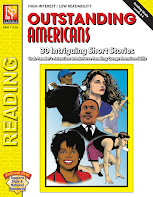
For more ideas in finding inspiration and avoiding burnout, check out our Outstanding Americans book and have a Happy Holidays!

Students' enthusiasm will skyrocket with this series of articles about outstanding Americans and their accomplishments. This high-interest/low-readability book is a terrific way to build basic skills while enhancing students' appreciation of cultural diversity. Outstanding Americans at remedia.com.

Or get this book from our Digital website RemediaDigital.com

Outstanding Americans. 

Helping Students Develop Social Skills


Improve Social Behavior

One of the most important things students learn at school is how to interact with each other. It isn’t taught as a subject like English, History, and Math, but perhaps it should be. And so, the subject falls on every teacher to teach social skills to every student, everyday.

Having possibly experienced isolation, financial hardships, and even loss of loved ones, students are yearning for a “return to normal.”  After being cooped up for over a year, many students will need a bit of a refresher when it comes to their social skills. Come to think of it, we all could!

Add the complication of having to wear masks, then social skills become even more important. With facial recognition not fully kicking in until the age of 14, younger children wearing masks can have a hard time recognizing their friends, let alone be able to communicate with them. There are ways to help them socially so we can all stay well physically.

communication
Improve Communication Skills

Students need to speak clearly and make eye contact while speaking. Listeners need to put all distractions aside and give their full attention. Educators can make a game of it. For example, have students read instructions that guide other students through a series of tasks.


Expression 


Remind them that even if they are wearing a mask they can still communicate with expressions. A smile can be seen in the eyes as well as the mouth. Expressive hand gestures and body language help with communication. Words, of course, can also express feelings.


Encourage Optimism

Model optimism by showing the students how to find the positive in what is originally seen as negative. A field trip being canceled for bad weather can feel like a real loss. Getting to watch a movie or play a game, and rescheduling the field trip can feel like a win. Encourage them to use positive words. “No worries,” uses two negative sounding words. “You’re welcome,” is a positive statement.


Being Easy-Going


After spending so much time with their families, students will have to relearn how to navigate social situations with their peers. Giving in doesn’t mean giving up. Remind students that when working in a group situation everyone can’t always have their way. When everyone makes compromises, common goals are more easily met.


Catch Them in the Act

Students interact with each other all day long. Acknowledge their acts of generosity and kindness. Make a game out of doing random acts of kindness in and out of the classroom. Have students share their personal favorite from that week.


Honesty


Talk about how practicing honesty isn’t a free pass to say cruel things. The goal and intention behind the truth are what matters. The old adage, “If you don’t have anything nice to say, don’t say anything at all,” still holds true.


Social Skills - Improving Behavior

For social skills lessons, check out the Real-World Skills Series for lessons on honesty, generosity and kindness; Real-World Skills: Social Skill - Improving Behavior (book 1) at remedia.com.

Or get this book from our Digital website RemediaDigital.com

Real-World Skills: Social Skills - Improving Behavior - Book 1


We, at Remedia Publications would like to congratulate the graduating class of 2019! Now that you have achieved that diploma, you should keep up the educational process by making learning a lifetime adventure. Our books are not just for school kids.

Remedia Publications

or for your who read or educate using eBooks, here is our digital website:
Remedia Digital