Encouraging Grit & Perseverance in Your Students

There is a lot of buzz about teaching students "grit." The word is gaining excitement and controversy, and no matter where you stand on the debate, it's hard to deny that encouraging students to have grit and perseverance can't be a bad thing. The idea of "grit" is like when if you fall off your bike, you pick yourself up, and get back on the bike. If we can instill this value in students who struggle in math, reading, or any other subject, just think how far they could go.
 
If you're interested in helping your students gain some grit and perseverance, you're going to have to put in some effort. Sometimes through the pounding over the head method of teaching and sometimes with a bit more subtlety. Because unfortunately, you can't teach these traits in one single lesson plan with a quiz and letter grade at the end. So we have compiled some suggestions on how to instill some tenacity in your students. 


Verbal Encouragement
Instead of general praise (i.e. you're so smart), recognize a student's performance based on their effort. Try saying, "Great job on that test! The time you spent after class reviewing really paid off." Students need to understand how their efforts effect their outcome, whether it be success or failure.

Resist the Urge to Offer Hints
Letting students struggle a little to answer a question will be a hard task for both you and your students. However doing this not only teaches them that it's okay to not always know the answer, as it's an opportunity to learn, but it also lets them become comfortable with the struggle. Just because it's not easy, isn't a reason to quit and give up. 

Pilgrim Pen Pals

Pilgrim Pen Pals: Writing & History Activity that Meets the Standards | Remedia Publications
You and your students will love this unique writing exercise! This activity meets the writing standards and will align with your history lessons about the pilgrims, Native Americans, the Mayflower, and the first Thanksgiving. You can even use this activity to assess students' understanding and knowledge.
Instructions: Imagine you were a passenger on the Mayflower. Now that you are in America and have started making a new home, write a letter to friend back in England. Tell about something that has happened since you left nine months ago.

Tip: Diversify this lesson by having some students write from a Native American’s point of view. These students can write letters or diary entries to show their understanding, which will give a complete perspective of the events during this time period.
Meet the Common Core State Standards with this Activity
Pilgrim Text Message | Remedia Publications
Enlarge
  • Students should begin by reading informational text to gain knowledge about this time period. (CC.R.I.10) 
  • Have students use the parts of a friendly letter correctly, including: date, greeting, body, closing, and signature. (CC.L.2)
  • Ask students to write their letters as narratives. They should  develop imaginary, yet realistic, experiences using effective technique, descriptive details, and clear event sequences. (CC.W.2 and CC.W.3)
  • Give students time to research, reflect, and revise their letters. (CC.W.10)
  • Require students to do additional research. Have them draw evidence from informational texts to support analysis and reflection while writing their letters. (CC.W.7-9)
  • Students should explain events, ideas, or concepts, including what happened and why, based on specific information they find. (CC.R.I.3)
  • Help students use technology to type and publish their letters. (CC.W.6) 
    • Students can type and print their letters, then display them on a bulletin board display (see Bulletin Board details below). 
    • Students can create a Fakebook account for their fictitious pilgrim. Learn more about Fakebook.
    • Students can write a text message conversation between two pilgrims, a pilgrim and a Native American, or a pilgrim and his friend in England using this SMS Generator.
Students will have a blast writing Pilgrim Pen Pal letters & I love meeting the standards! via @remediapub { Tweet This }
Bulletin Board: Pilgrim Pen Pals
Create a bulletin board to display students’ letters.Pilgrim Pen Pals Bulletin Board | Remedia Publications

Use this pattern to make a pilgrim boarder.
Pilgrim Bulletin Board Pattern | Remedia Publications
Cut construction paper strips 3”x18”. Fold in half. Fold in half again. Place pattern on paper, trace, and cut while still folded. Open and decorate the pilgrims. Students can do this fun activity after all of the hard work they’ve put into their letters.


Need step-by-step activities to improve writing skills?

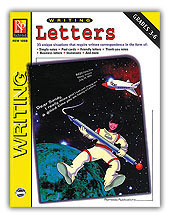
We've got you covered! Our Writing Basics Series has 8 books to help you improve one writing skill at a time. Including our Writing Letters, which is filled with lessons that teach skills needed to write business, invitational, thank you, and friendly letters.

Candy Corn Activities

10 Candy Corn Activities to Help Celebrate Candy Corn Day on October 30 | Remedia Publications
October 30 is Candy Corn Day. Yep, you read that right. Candy corn has a day dedicated to it! Instead of eating the entire jumbo-sized bag of candy corn you just bought to celebrate this new-found “holiday,” try incorporating it into these activities for your students.

Tips for Boosting Vocabulary Skills

Tips for Improving Students' Vocabulary Skills | Remedia Publications
Vocabulary instructions should be both organic and planned. Learning new words shouldn’t be a chore. Spark an interest in students to discover new words by discussing unusual words, talking about the history of words, playing word games, and most importantly read, read, read! Try these five tips, plus free downloads to help boost your students vocabulary.

5 Non-Reading, Inference Activities

5 Non-Reading, Inference Activities | Remedia Publications

Making inferences means using facts and reasoning to come to a decision or an opinion about something. Doing this involves an abstract level of thinking and can, therefore, be a complicated skill to teach, especially to students who struggle with reading. With practice though, students can become comfortable with the skill before having to tackle the concept while reading. These five activities will give your students a chance to practice making inferences without reading.